


Leaving Corporate to Start a Wellness Business: Build Your Business Acumen

Changing careers is only one part of building a wellness business. Leaving corporate to start a wellness business also means shaping a clear service, understanding its commercial demands and working within ethical professional boundaries.
Your experience in planning, communication or leadership can give you a useful foundation. But supporting clients in health and wellbeing also calls for relevant knowledge and practical preparation. This article covers how to define your offer, plan for self-employment and choose education suited to your intended role.
Consider how to define your offer, prepare for the realities of self-employment and identify training that fits your intended role. The goal is a considered transition that brings professional standards and sound business decisions together.
Table of Contents
Business acumen
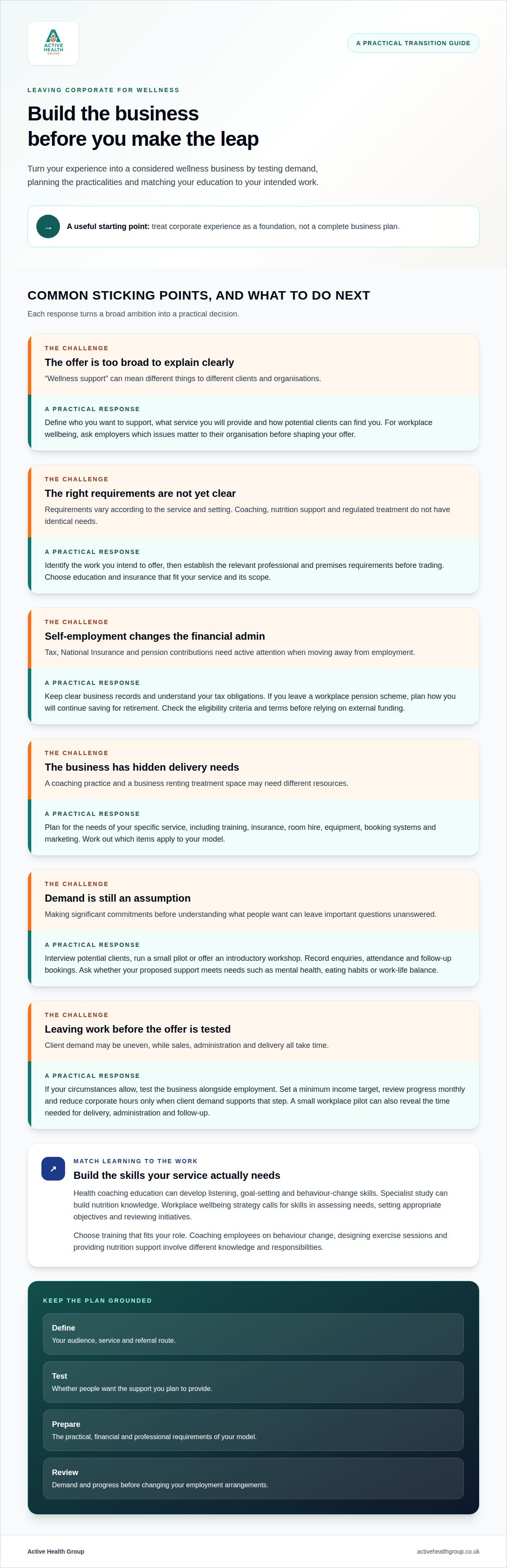
If you’re leaving corporate to start a wellness business, treat your experience as a foundation, not a complete business plan. Define your client, service and referral route, then test whether people want that support. For workplace wellbeing, speak with employers about employees’ mental health, culture and current wellness initiatives. Ask decision-makers which issues matter to their organisation before shaping your offer.
There isn’t one set of requirements for every wellness business. Requirements depend on your service and setting, so identify whether you’ll provide coaching, nutrition support or a regulated treatment, then establish the relevant professional and premises requirements before trading.
Moving from employment to self-employment changes how you manage tax, National Insurance and pension contributions. Keep clear business records and understand your tax obligations. If you leave a workplace pension scheme, plan how you’ll continue saving for retirement.
Plan for the needs of your specific service, such as training, insurance, room hire, equipment, booking systems and marketing. An online coaching practice may need different resources from a business renting treatment space.
Test demand before making significant commitments. Interview potential clients, run a small pilot or offer an introductory workshop, then record enquiries, attendance and follow-up bookings. Ask what support people want, such as help with mental health, eating habits or work-life balance, and whether your proposed service meets that need.
If you’re considering external funding, check the eligibility criteria and terms before relying on it.
If your circumstances allow, test the business alongside employment. Set a minimum income target, review your progress monthly and reduce your corporate hours only when client demand supports that step.
2. Education for a corporate wellness career
Corporate experience can help you understand workplace systems, but employee wellbeing work also requires relevant education. First identify your role: coaching employees on behaviour change, designing exercise sessions and providing nutrition support involve different knowledge and responsibilities.
For workplace wellbeing strategy, learn to assess needs, set appropriate objectives and evaluate initiatives. For example, when planning a programme to support healthier routines, consider how employees will take part and how you’ll review their feedback and satisfaction. Read studies critically, distinguish evidence from marketing claims, and avoid promising increased productivity or guaranteed results.
Choose training that prepares you for the work you intend to offer. Health coaching education can develop listening, goal-setting and behaviour-change skills. Specialist study can build nutrition knowledge, while workplace experience can help you adapt communication to teams and organisational culture.
There is no single qualification or insurance package for every wellness business. Requirements depend on the service and its scope. Choose education relevant to your work and arrange insurance that covers the services you provide. A coach and an exercise instructor, for example, may need different preparation and cover.
The transition also brings practical risks. Corporate income and established routines may give way to uneven client demand, sales responsibilities and less day-to-day team contact. Before resigning, test your service with a small workplace pilot and track the time needed for delivery, administration and follow-up.
Build a development plan around specific gaps. If you can present to groups but need more practice supporting individual behaviour change, prioritise coaching skills. If your role centres on physical activity, make sure your education matches the work and its professional boundaries.
3. What types of wellness businesses can you start in the UK?
Your business model should reflect the service you’re qualified to provide and the people you want to support. An online health coach, for example, might help individuals with behaviour change, while a workplace consultant could help employers plan wellbeing initiatives.
Health coaching is one option. Sessions can help clients set realistic goals around sleep, stress management or physical activity. You might offer one-to-one appointments, group coaching or online sessions. Decide whether to focus on a defined audience, such as employees adjusting to remote work, or a broader group.
Nutrition education is another possible specialism. A practitioner could provide general nutrition coaching or run workshops on meal planning for busy teams. Set clear boundaries, explain what the service covers and avoid presenting general education as individualised clinical care.
You can also serve employers directly by designing a wellbeing workshop series, delivering coaching sessions or helping a company review whether its initiatives fit staff needs. Define the deliverables in advance, including workshop content, session frequency and how participant feedback will inform future planning.
Group workshops can suit practitioners who enjoy teaching. A session on stress-management skills, healthy routines or goal-setting can introduce your approach to potential clients. Online resources or follow-up coaching may extend the offer, provided each element fits your training and professional scope.
As you shape your offer, use practitioner resources to clarify how you describe your service and what clients can expect from each session.
Active Health Group
Active Health Group can support your transition with professional education in health coaching and nutrition. If your planned business centres on behaviour change and nutrition, the Level 5 Advanced Diploma in Integrative Health and Nutrition Coaching or Level 6 Diploma in Health Coaching and Clinical Nutrition may fit your development goals. For a stronger clinical nutrition focus, consider the Level 6 Diploma in Clinical Nutrition. The Level 5 Certificate in Gut Microbiome and Nutrition offers a specialist subject area.
Choose a programme by starting with the service you intend to provide, then consider the knowledge and practical skills needed to deliver it responsibly. Training can help you build on your corporate strengths, prepare for evidence-informed client work and understand professional practice.
If you’re considering a qualification as part of your career change, contact Active Health Group to discuss your next steps.
Take your next step with purpose
For someone leaving corporate to start a wellness business, the next step is to turn a broad ambition into a defined professional direction. Write a short statement describing whom you want to support, the change you can responsibly help them work towards and the limits of your role. Use it as a consistent reference point for future decisions.
Next, identify which capabilities you need to strengthen before offering that service. Consider the knowledge, coaching approach and professional standards involved, then compare these with your experience. A learning plan can help you move from corporate strengths towards practice grounded in appropriate preparation, clear communication and continued development.
Active Health Group’s education in health coaching and nutrition can help you develop relevant knowledge for your intended work. If you’d like to discuss a suitable direction, contact Active Health Group today. Take your next step at a pace that supports careful, responsible practice.
Frequently Asked Questions
How do you write a business plan for a wellness startup?
Set out the business you intend to run, the clients you aim to serve and how your service will meet their needs. Describe your offer, delivery format, client pathway and marketing channels. Add a plan for managing your time and reviewing progress. For example, a workplace coaching service could define how employers enquire, book sessions and receive feedback.
How do you identify the right clients for a wellness business?
Consider who is most likely to benefit from your service and what they need support with. Speak with people in your intended audience, review common questions and identify how your skills match their needs. For example, a one-to-one service might focus on clients seeking support with a specific wellbeing goal. Review feedback regularly and adjust your offer or communication as needed.
How do you build a client pathway for a wellness business in the UK?
Map each step from a prospective client’s first enquiry to the end of their support. Consider how clients learn about your service, book sessions, share relevant information and receive follow-up. Set clear expectations and consider how you will gather feedback and maintain appropriate records.


Comments