


Gut Microbiome Course UK with Online and In-Person Learning

The right gut microbiome course in the UK can combine flexible online study with in-person learning. It may suit aspiring and practising health coaches, nutrition professionals and wellbeing practitioners who want to build structured knowledge they can apply within their professional boundaries.
Gut health involves more than food choices alone. A well-rounded course should help you understand how diet, daily habits and the gut-brain axis relate, while offering a way to study alongside work or other commitments. This article explains who the training may suit, how different learning formats work, and how topics such as fermented foods, probiotics, stress and sleep fit into study. It also covers what to consider when deciding whether this is the right next step in your professional development.
Table of Contents
Fermented foods, probiotics, inflammation and stress
Gut microbiome study connects nutrition science with digestion, lifestyle and professional practice. Course content should distinguish established evidence from claims about specific health outcomes.
Fermented foods and probiotics
Live-culture yoghurt, kefir and kimchi are fermented foods, but fermentation alone does not make a food a probiotic. The term probiotic is generally used for live microorganisms studied for potential health benefits. UK courses range from specialist certificates to broader nutrition qualifications. University teaching may cover microbiome topics within nutrition, microbiology or biomedical science modules.
Recognition depends on the qualification and its validating or approving body. Before enrolling, check the stated award and professional recognition. This learning may support work in nutrition education or health coaching when it complements your existing training and professional scope, but it does not guarantee a particular career outcome.
Prebiotics and postbiotics
Prebiotics are substances used by microorganisms, including some dietary fibres. Probiotics are live microorganisms, while postbiotics are preparations of inanimate microorganisms or their components. A useful course explains these distinctions with examples, then considers how stress and inflammation may relate to gut function without treating association as proof of cause.
Fees vary by qualification, assessment and delivery format, so consult the relevant programme page for current fees. Enrolment and start dates follow the provider’s application process and listed intakes. Unregulated training may lack clear assessment or professional recognition, so examine its learning outcomes and award details. A gut microbiome course in the UK should support careful, evidence-informed learning, not substitute for clinical training.
Sleep, digestion, emotional wellbeing and the gut-brain axis
The gut-brain axis describes two-way communication between the digestive system and brain. It involves nerve pathways, immune signalling, hormones and chemical messengers. For example, gut sensations can influence appetite or comfort, while stress may affect how digestion feels. Studying the gut-brain axis means examining these interactions, not assuming that one symptom has a single cause.
Sleep is another relevant factor. A disrupted night may affect appetite, meal timing and the experience of digestive discomfort the following day. Education should distinguish these possible connections from proof that poor sleep causes a particular gut condition. A practical learning task could ask students to note sleep patterns, food routines and symptoms separately, then consider how they might relate.
Stress and emotional wellbeing also need careful interpretation. Someone preparing for an exam, for instance, might notice changes in appetite or bowel habits. This example can help learners discuss the gut-brain axis without claiming that stress explains every symptom. Hormones are part of the body’s signalling systems, but their role should be taught with context and evidence, not reduced to a single “stress hormone” explanation.
Strong course materials build knowledge from biological mechanisms to professional application. They should explain how digestion, the nervous system and immune activity interact, then show how to discuss lifestyle observations responsibly. Learners can practise distinguishing a client’s reported experience from a clinical diagnosis and avoid promising specific outcomes. This evidence-informed approach supports useful conversations about nutrition and wellbeing while keeping professional boundaries clear.
Online and in-person delivery
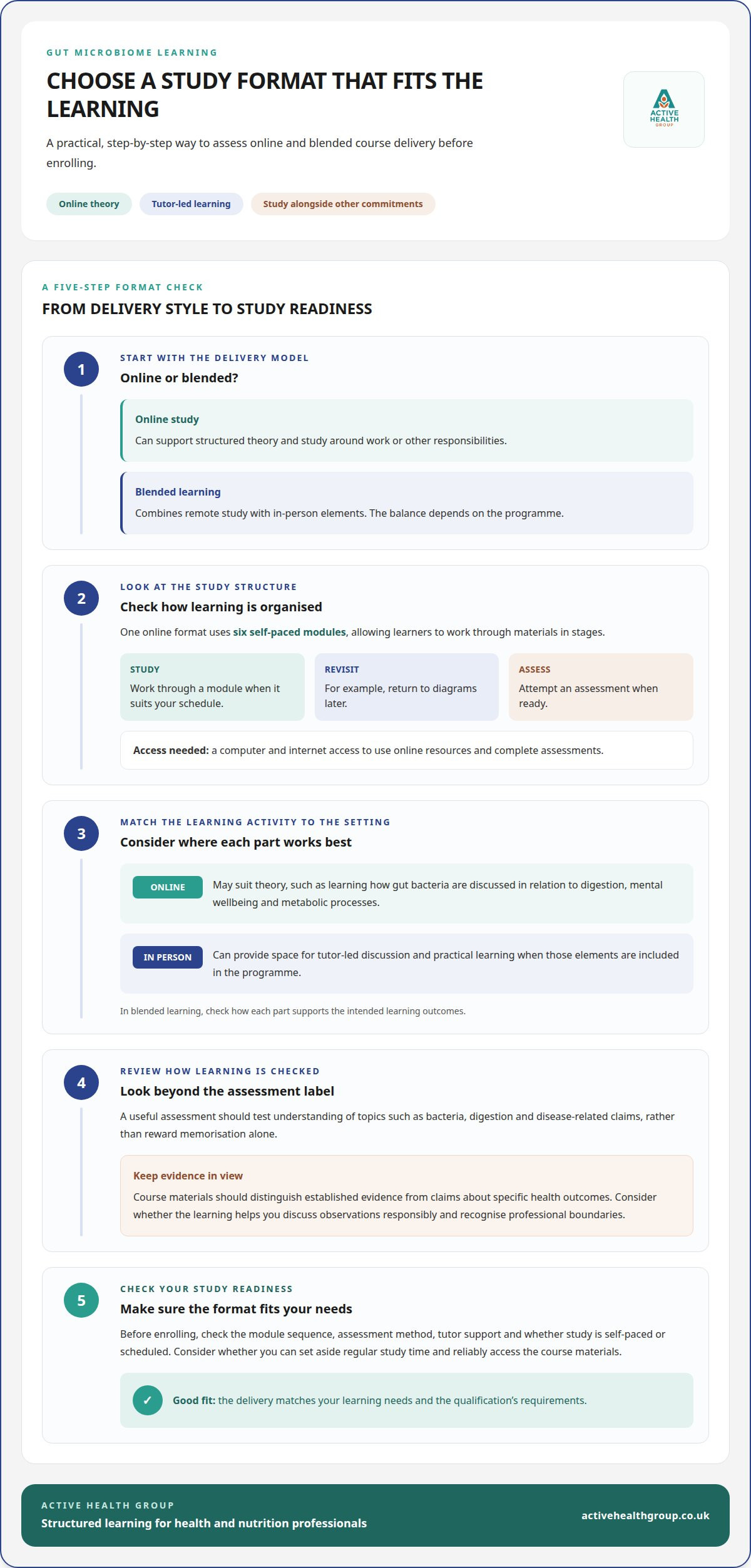
Delivery affects how you fit study around work and practise applying nutrition knowledge. Online study can support structured theory, including how gut bacteria are discussed in relation to digestion, mental wellbeing and metabolic processes. In-person teaching offers another setting for tutor-led discussion and practical learning when these elements are part of the programme.
One online format uses six self-paced modules, allowing learners to work through materials in stages. You’ll need a computer and internet access to use online resources and complete assessments. For example, you could study a module after work, revisit its diagrams later, then attempt the assessment when ready. This structure can support professional development alongside existing responsibilities.
Blended learning combines remote study with in-person elements. The balance depends on the programme, so consider how each part supports the intended learning outcomes. A theory topic, for example, may suit online study, while a scheduled practical activity can provide space for discussion and application with tutor guidance.
Before enrolling, consider how you learn best. Review the module sequence, assessment method, tutor support and whether study is self-paced or scheduled. A useful assessment should test understanding of topics such as bacteria, digestion and disease-related claims, rather than reward memorisation alone. Also consider whether you can set aside regular study time and reliably access the course materials.
Choose a format that matches your learning needs and the qualification’s requirements. If online study suits your schedule, explore gut microbiome course study options and consider how the assessment and learning materials support your goals.
Active Health Group: Level 5 Certificate in Gut Microbiome and Nutrition
The Level 5 Certificate in Gut Microbiome and Nutrition from Active Health Group is a focused next step for learners seeking structured study in this specialist area. It brings gut microbiome and nutrition together, helping you develop knowledge relevant to professional learning and development.
If you want to extend your studies beyond this subject, the Level 5 Advanced Diploma in Integrative Health and Nutrition Coaching or the Level 6 Diploma in Health Coaching and Clinical Nutrition offers a wider combination of nutrition and coaching education. Choose according to your current experience and the direction you want your professional development to take.
To discuss whether the Level 5 Certificate in Gut Microbiome and Nutrition fits your learning goals, contact Active Health Group.
Choose your next step in nutrition training
Choosing a gut microbiome course in the UK is an opportunity to build focused knowledge and consider how it fits your longer-term professional direction. If you want to develop beyond a specialist certificate, Active Health Group also offers the Level 5 Advanced Diploma in Integrative Health and Nutrition Coaching, the Level 6 Diploma in Clinical Nutrition, and the Level 6 Diploma in Health Coaching and Clinical Nutrition. Each provides a different emphasis, from integrating coaching with nutrition to deeper study of clinical nutrition.
Think about the knowledge you want to apply, the learners or clients you aim to support, and the scope of your current practice. Those priorities can help you decide which level and focus best match your plans. For guidance on the available training pathways, contact Active Health Group to enquire. A considered next step can help you build your practice with care and purpose.
Frequently Asked Questions
Who Is This Course For?
This training may suit aspiring or practising health coaches, nutrition professionals and wellbeing practitioners seeking focused professional development. It may also interest people changing careers who plan to build a role in health and wellbeing. Before choosing, consider your previous study, the clients or communities you hope to support, and whether the subject complements your professional experience.
What are microbiomes?
Microbiomes are communities of microorganisms living in a particular environment. They include bacteria, fungi and viruses, along with their interactions with one another and their surroundings. The term describes communities in different parts of the body or other environments. For example, the gut and skin each have distinct microbial communities shaped by local conditions.
What Will You Learn?
You’ll build subject knowledge to help interpret microbiome information thoughtfully. This includes recognising the difference between a plausible explanation and a claim that needs stronger evidence. In practice, that might mean discussing a client’s question about a food trend in balanced terms, rather than presenting one dietary choice as suitable for everyone.
What will you achieve?
You can build a clearer foundation for applying gut-health knowledge in conversations related to your existing role. For example, a practitioner may learn to explain why individual experiences differ, then ask open questions about a person’s priorities and context. Applying that knowledge responsibly means staying within your competence and avoiding diagnosis or promises of a particular result.
What will you gain?
You’ll gain a defined area of knowledge to inform your ongoing professional development. It may help you identify further learning needs, communicate more precisely and connect nutrition topics with your existing practice. The benefit depends on how you apply the learning alongside your prior education, practical experience and professional responsibilities. Treat it as one part of continued development, not a complete career pathway.



In Buckshot Roulette, I tried to keep track of the reasons behind my decisions instead of only remembering the results. It gave me a better idea of which habits were helping and which ones were holding me back.