.png)


Burnout and Fatigue Clinical Training: A Professional Guide to Advanced Practice in 2026

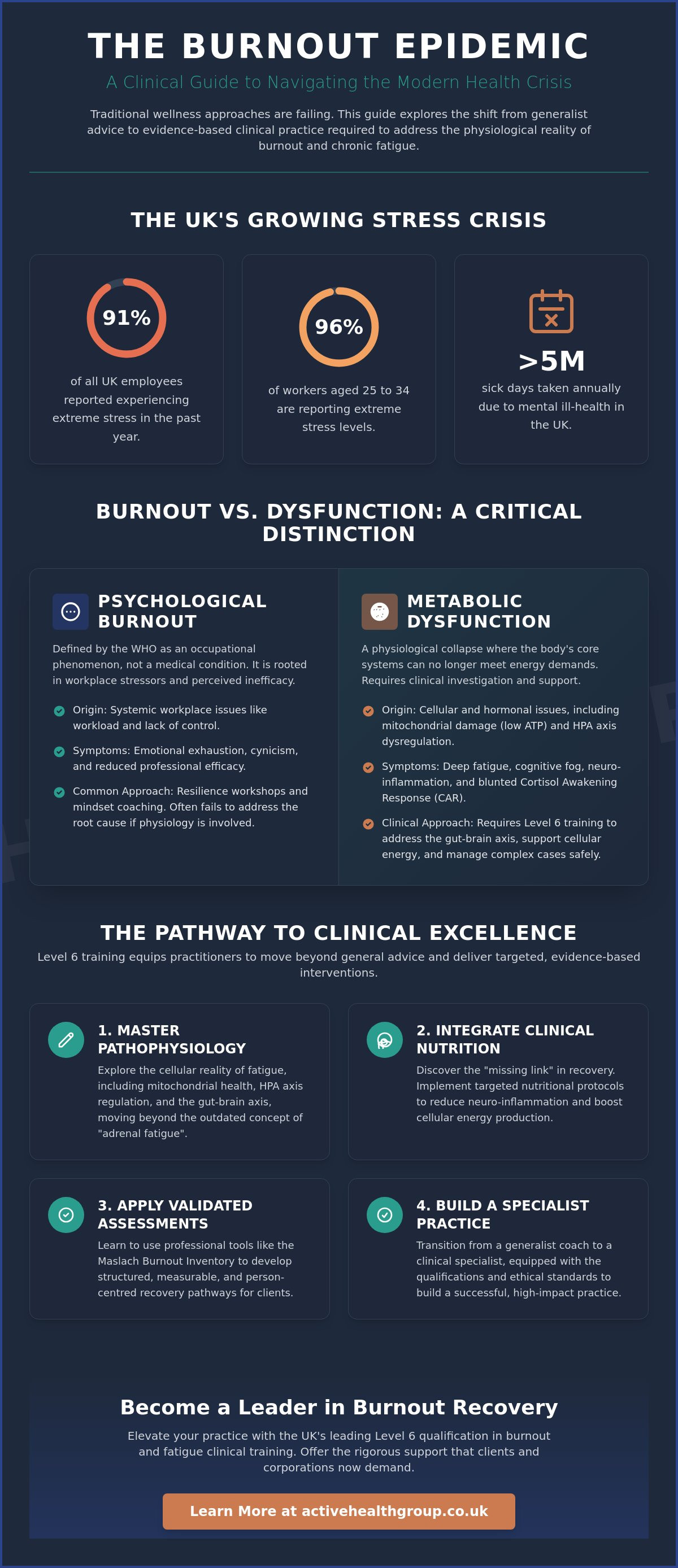
With 91% of employees reporting extreme stress and the UK surpassing five million sick days due to mental ill-health in 2026, the traditional approach to wellness is failing. As an advanced practitioner, you've likely felt the frustration of seeing clients who aren't just tired; they're experiencing a physiological collapse that simple "resilience" workshops cannot fix. Seeking burnout and fatigue clinical training is the natural response to feeling ill-equipped when trying to distinguish between psychological burnout and metabolic dysfunction, especially when 96% of workers aged 25 to 34 are now reporting extreme stress levels.
This guide demonstrates how to master these complexities through evidence-based training designed for the modern health landscape. You'll learn how to move from generalist support to a Level 6 clinical standard, integrating nutrition and coaching to address both the metabolic fuel and the psychological fire. We'll explore the pathways to gaining a professional qualification that allows you to build a specialist practice with high ethical standards and real-world readiness.
Key Takeaways
Distinguish between psychological burnout and metabolic dysfunction by exploring the pathophysiology of mitochondrial health and HPA axis regulation.
Understand why advanced burnout and fatigue clinical training at Level 6 provides the rigorous evidence base required to manage complex chronic cases safely.
Identify the "missing link" in recovery by integrating targeted clinical nutrition protocols to address neuro-inflammation and cellular energy production.
Master the application of validated assessment tools, including the Maslach Burnout Inventory, to develop structured, person-centred recovery pathways.
Transition from providing general resilience advice to leading a specialist practice grounded in high ethical standards and clinical excellence.
Table of Contents
The Clinical Landscape of Burnout and Fatigue in the UK
The UK health landscape in 2026 faces a critical challenge that requires a more sophisticated response than ever before. Whilst stress has always been a factor in the workplace, we're seeing a transition from temporary pressure to systemic physiological collapse. This shift has created an urgent need for burnout and fatigue clinical training that goes beyond surface-level interventions.
Practitioners must now be able to distinguish between Occupational Burnout, which the WHO defines as a workplace phenomenon, and Myalgic Encephalomyelitis/Chronic Fatigue Syndrome (ME/CFS). The latter is a complex multisystem disease governed by the NICE guideline NG206, which emphasises that fixed exercise programmes can often be harmful.
Standard resilience training often fails because it treats metabolic exhaustion as a mindset problem. When a client's mitochondria cannot produce sufficient ATP, no amount of positive thinking will restore their energy levels. As an advanced practitioner, it's your ethical responsibility to recognise the limits of your scope.
You aren't just a mentor; you're a clinical guide who must understand the biological underpinnings of exhaustion. This involves knowing when a client's symptoms require a medical referral to rule out underlying pathology.
Distinguishing Burnout from Secondary Trauma
Practitioners in high-pressure sectors often conflate burnout with secondary trauma or compassion fatigue. Whilst burnout usually stems from systemic workplace issues and a lack of professional efficacy, secondary trauma is the emotional residue of working with people who are suffering. It's vital to recognise the specific markers of each. Cognitive fog and emotional detachment are common, but physical markers like disrupted sleep and persistent neuro-inflammation suggest a deeper metabolic issue. A health coach who has completed advanced burnout and fatigue clinical training acts as a pivotal triage point, identifying "red flag" symptoms that suggest clinical fatigue rather than purely psychological stress.
The Economic and Social Impact of Fatigue
The data for 2026 is stark and demands a professional response. The UK has surpassed 5 million sick days due to mental ill-health, with 91% of employees reporting extreme stress in the past year. Corporate wellness is finally shifting away from generic workshops and fruit bowls. Businesses are now seeking integrative health solutions that require formal professional accreditation. This is why Level 6 depth is becoming the industry standard. It ensures that practitioners can offer the rigorous support that companies now demand to keep their workforce functional and healthy in a high-pressure economy.
To ensure your organisation meets the highest standards of workplace risk management, you can visit Guardian Safety for professional occupational safety training and consultancy.
The Pathophysiology of Chronic Fatigue: A Level 6 Perspective
Advanced practice requires moving beyond the "tired all the time" narrative. Comprehensive burnout and fatigue clinical training must address the cellular and hormonal reality of the patient. Whilst popular wellness culture often cites "adrenal fatigue," clinical science has moved towards a more nuanced understanding of HPA axis dysregulation. Research into the neurophysiological factors of burnout suggests that chronic stress doesn't just exhaust the glands; it alters the brain's regulatory centres. This shift from a simple glandular model to a complex neurological one is fundamental for effective clinical intervention.
The gut-brain axis also plays a central role in systemic exhaustion. Chronic stress increases intestinal permeability, allowing pro-inflammatory cytokines to enter the bloodstream. This systemic inflammation triggers an immune response that directly impacts neuro-inflammation and cognitive function. Practitioners who understand this link can offer far more effective support than those focusing solely on psychological resilience. It's about recognising that the mind and body are part of a single, integrated system where digestive health often dictates mental clarity.
Hormonal Dysregulation and the Stress Response
The HPA axis is a complex feedback loop between the brain and the endocrine system. In healthy individuals, the Cortisol Awakening Response (CAR) provides a sharp rise in cortisol within 30 to 45 minutes of waking. This prepares the body for the day's demands. In burnout cases, this response is often blunted or flattened.
Prolonged high cortisol levels eventually lead to metabolic resistance, impacting thyroid function and blood sugar regulation. This hormonal cascade explains why clients feel "wired but tired," a state where the body is stuck in a perpetual, albeit inefficient, stress loop. Understanding these markers allows for a more targeted recovery plan.
Nutritional Biochemistry of Energy Production
Energy isn't just a feeling; it's a biochemical product. The Krebs cycle requires specific micronutrient co-factors, including B vitamins, magnesium, and CoQ10, to produce ATP. Chronic stress increases oxidative stress, which can damage mitochondrial membranes and reduce cellular energy efficiency. This is where evidence-based nutrition coaching becomes essential. It allows the practitioner to identify specific nutritional gaps that prevent recovery.
Mitochondrial dysfunction is perhaps the most significant metabolic marker of long-term fatigue. When the body perceives a constant threat, it shifts from energy production to a survivor-based response. This mechanism prioritises immediate defence over long-term repair, leading to the profound physical exhaustion seen in clinical cases. If you're ready to bridge the gap between theory and practice, the Level 6 Diploma in Clinical Nutrition provides the rigorous scientific foundation needed to manage these complex metabolic cases effectively.
Comparing Training Models: Professional Certification vs CPD
Selecting the correct educational pathway is a defining moment in a professional's career. Whilst many short-form courses offer "awareness" of stress management, they rarely provide the clinical tools needed to address systemic exhaustion. Professional burnout and fatigue clinical training must offer more than a theoretical overview; it must prepare you for the ethical and practical realities of client care. This is the fundamental difference between a weekend Continuing Professional Development (CPD) workshop and a comprehensive practitioner qualification that carries academic weight.
Level 6 depth is essential for managing the multisystem complexities of chronic fatigue. At this level, you aren't just learning what burnout is; you're learning how to intervene in the metabolic and neurological processes discussed previously.
Professional indemnity insurance providers increasingly recognise this distinction. Holding a higher-level qualification often simplifies the process of securing comprehensive cover. It signals to insurers that you operate within a defined, evidence-based scope of practice, which is vital for maintaining high professional standards in a private clinical setting.
Academic Rigour and Real-World Readiness
The progression from Level 5 to Level 6 represents a significant shift in clinical responsibility. Level 5 pathways typically focus on health coaching and foundational nutrition, providing the skills to support general lifestyle change. In contrast, Level 6 training demands a deeper engagement with clinical case studies and complex nutritional biochemistry. AHG’s Level 6 Clinical Nutrition bridges the gap between theory and practice, ensuring that practitioners can navigate the nuances of mitochondrial dysfunction with confidence. This academic rigour ensures you don't just know the science but can apply it effectively to improve client outcomes.
The Role of Accreditation in the UK
The UK health coaching landscape is currently governed by voluntary regulation, making the choice of training provider even more critical. Not-for-profit organisations often prioritise the integrity of the curriculum over commercial margins. This ensures that evidence-based standards remain at the forefront of the training. Evaluating course content for clinical standards involves looking beyond the marketing. It requires a focus on tutor-led support and the depth of the assessment process. A robust, accredited qualification acts as a seal of professional excellence, giving both you and your clients the security that your practice is grounded in recognised clinical standards.
Clinical Assessment Strategies for Burnout and Fatigue
Assessment is the bridge between understanding pathophysiology and delivering an effective recovery plan. Advanced burnout and fatigue clinical training equips you with the skills to construct a comprehensive health history and symptom timeline. This process often reveals that what a client perceives as a recent collapse is actually the result of years of cumulative metabolic debt. By mapping these markers, you can identify whether the fatigue is a primary workplace issue or a secondary symptom of an underlying physiological imbalance. This distinction is vital for creating a safe and effective pathway forward.
Using validated tools like the Maslach Burnout Inventory (MBI) allows you to quantify emotional exhaustion and reduced professional efficacy. However, a clinical practitioner must balance this with metabolic screening. Whilst the MBI identifies the "fire" of burnout, screening for blood sugar stability and nutrient status identifies the "fuel" deficit. The art of clinical listening is equally vital. You must learn to hear the hidden triggers in a client’s narrative, such as subtle signs of post-exertional malaise or cognitive dysfunction that the client may have normalised over time. This nuanced approach ensures that no stone is left unturned during the initial consultation.
Establishing a clear "Scope of Practice" framework is the final pillar of safe assessment. This ensures you can provide robust support whilst knowing exactly when a client’s presentation requires a multi-disciplinary approach. Recognising your professional boundaries is not a limitation; it's a mark of clinical excellence that protects both the practitioner and the client.
Metabolic and Lifestyle Screening
A thorough assessment must include an analysis of sleep hygiene, circadian rhythm, and blood sugar stability. Nutritional deficiencies, particularly in magnesium, zinc, or B12, often mimic the symptoms of psychological burnout. Identifying these early prevents the practitioner from misattributing physical exhaustion solely to mental stress. Collaborative practice is essential; knowing when to request that a client visits their GP for specific blood work is a hallmark of a high-standard professional. This ensures that clinical interventions are grounded in data rather than guesswork.
Coaching Psychology in Fatigue Management
Working with clients who have limited cognitive energy requires specific behaviour change techniques. Traditional high-energy coaching can be counterproductive for those trapped in a "push-crash" cycle. Instead, you'll utilise pacing and energy budgeting to help them regain control without further depleting their reserves. Integrating Level 5 Health Coaching principles ensures that your clinical interventions are supported by sustainable lifestyle changes that respect the client's current energy capacity.
If you are ready to move from foundational knowledge to professional mastery, explore our professional roadmap to advanced clinical practice to gain the credentials required for this specialist field.
Integrating Clinical Nutrition into Burnout Recovery
Many recovery programmes fail because they treat burnout as a purely psychological event. Whilst coaching and therapy are vital, they often ignore the biological "fuel" required for the nervous system to repair itself. Nutrition is frequently the missing link in clinical practice; without the correct biochemical support, the body remains in a state of physiological depletion. Effective burnout and fatigue clinical training must therefore integrate nutritional science to address the physical exhaustion that accompanies chronic stress. By providing the body with the specific micronutrients needed for repair, you help your clients move from surviving to thriving.
Neuro-inflammation is a primary driver of the "brain fog" and cognitive fatigue seen in advanced burnout cases. Anti-inflammatory dietary protocols are essential here, as they help to dampen the immune response that keeps the brain in a state of high alert. Transitioning from a general nutritionist to a Level 6 Health Coach allows you to bridge this gap. You'll learn how to apply clinical nutrition within a coaching framework, ensuring that dietary changes are both scientifically sound and practically sustainable for a client with limited energy reserves.
The Gut-Brain-Immune Connection
The gut is often referred to as the "second brain," and its role in burnout recovery cannot be overstated. Chronic stress often leads to increased intestinal permeability, commonly known as leaky gut. This condition allows undigested food particles and toxins to enter the bloodstream, triggering systemic inflammation and further depleting the body's energy. Gut dysbiosis directly impairs the production of neurotransmitters like serotonin and GABA, which are essential for mood regulation and mental clarity. By supporting the enteric nervous system through targeted nutritional protocols, you address the root cause of many psychological symptoms. This integrated approach ensures that the immune system is calmed, allowing the body's resources to be redirected towards energy production and tissue repair.
Building Your Specialist Practice
Positioning yourself as a burnout specialist in the UK market requires a clear professional roadmap. The journey typically begins with Level 3 foundations, which provide the essential entry point into the profession. From there, practitioners progress through more advanced certifications to reach the clinical depth required for complex cases. This structured growth ensures that you build a solid ethical and scientific base before taking on the responsibility of advanced practice.
The final step in this journey is the Level 6 Diploma in Health Coaching and Clinical Nutrition. This qualification provides the academic rigour and clinical expertise needed to lead the field in 2026. It's about more than just gaining a certificate; it's about becoming a practitioner-led mentor who can navigate the complexities of modern health with integrity. If you're ready to commit to the highest professional standards, enrolling in advanced burnout and fatigue clinical training is the most effective way to build a rewarding, specialist practice that makes a meaningful impact on your clients' lives.
Elevating Your Practice to Meet the 2026 Clinical Standard
The transition from managing workplace stress to addressing systemic physiological collapse defines the next era of health coaching. By mastering the pathophysiology of mitochondrial health and the gut-brain-immune connection, you move from generalist support to a specialised clinical standard. This depth ensures you can safely navigate complex cases whilst maintaining the highest ethical boundaries. It's about moving beyond simple resilience workshops to provide the metabolic support that true recovery requires.
Securing advanced burnout and fatigue clinical training is the most direct path to professional recognition in this growing field. As a not-for-profit educational organisation with 25 years of professional training experience, we provide an accredited Level 6 clinical curriculum designed for real-world readiness. You're invited to view our Level 6 Diploma in Health Coaching and Clinical Nutrition to begin your journey toward becoming a leader in fatigue management. Your commitment to these high standards will be the stable foundation for your clients' long-term recovery and your own professional success.
Frequently Asked Questions
Is burnout a recognised medical diagnosis in the UK?
Burnout is not currently classified as a medical condition in the UK; instead, it is recognised by the World Health Organisation as an occupational phenomenon. It is defined as a syndrome resulting from chronic workplace stress that has not been successfully managed. Understanding this distinction is vital for practitioners to ensure they operate within their professional scope whilst supporting clients through physiological and lifestyle recovery.
What is the difference between burnout and chronic fatigue syndrome (CFS) training?
Burnout training focuses on the physiological impact of chronic workplace stress and HPA axis dysregulation, whereas chronic fatigue syndrome (CFS) training centres on a complex multisystem disease. CFS training specifically addresses the NICE guideline NG206, including the management of post-exertional malaise (PEM). Advanced burnout and fatigue clinical training ensures you can distinguish between these two distinct presentations safely and provide the correct support framework.
Can I work as a burnout specialist without a medical degree?
Yes, you can practice as a burnout specialist by qualifying as a Level 6 Health Coach or Clinical Nutritionist. Whilst you won't provide medical diagnoses or direct clinical treatment, your role involves supporting the physiological and psychological recovery of clients through evidence-based interventions. This professional pathway allows you to work alongside medical practitioners to provide comprehensive, integrative care for those experiencing systemic exhaustion.
How long does a Level 6 clinical training course usually take to complete?
A Level 6 Diploma in Clinical Nutrition or Health Coaching typically takes between 12 and 18 months to complete. This duration allows for the deep academic engagement and clinical case study work required to meet advanced professional standards in 2026. The structured nature of the curriculum ensures that you move methodically from foundational theory to advanced clinical application at a manageable pace.
What are the prerequisites for advanced clinical nutrition training?
Prerequisites for advanced clinical nutrition training usually include a foundational qualification at Level 3 or Level 5 in health coaching or nutrition. Some practitioners enter the programme with existing degrees in healthcare or science-related fields. These entry requirements ensure that all students possess the necessary scientific understanding to engage with the complex biochemistry and clinical protocols taught at Level 6.
Is this burnout and fatigue clinical training accredited for insurance purposes?
Yes, our burnout and fatigue clinical training is fully accredited, which is essential for obtaining professional indemnity insurance. Insurance providers require proof of a rigorous, evidence-based education before they'll grant cover for advanced clinical practice. This accreditation ensures that your specialist practice is recognised by professional bodies and operates under the highest ethical and safety standards.
How does metabolic health training help in treating psychological burnout?
Metabolic health training allows you to address the biological "fuel" that the nervous system requires to recover from psychological "fire." By understanding mitochondrial function and blood sugar stability, you can identify why a client’s brain remains in a state of high alert despite psychological support. This integrated approach ensures that behaviour change is underpinned by the physical energy required for lasting recovery.
What is the career outlook for clinical nutritionists specialising in fatigue?
The career outlook is exceptionally strong, as 91% of employees reported high or extreme stress levels in the past year. There is a significant shortage of practitioners who can manage the complex intersection of metabolic fatigue and workplace burnout. Specialising in this field allows you to build a high-demand practice within corporate wellness environments or private clinical settings where specialist knowledge is highly valued.


Has anyone else used a name generator for character names? I tried it while working on a fantasy character and found several combinations that fit the theme nicely.